Saturday, August 22, 2009

On Independence Day, ‘harassed husbands’ to demand ‘freedom’

All the four groups are working for equal rights for men and women in India. We feel that in many instances, the Indian law is biased when it comes to husbands, as it often favours the wives. Be it in the case of custody of children for divorced couples or false allegations of domestic violence and dowry harassment, the law generally takes the side of women, without listening to the side of men," said Kumar.

"However, we would like to clarify one thing. We're no women haters. This is about equal rights of both men and women," said Kumar Jahgirdar, founder of CRISP.

In order to prove that harassment of husbands was prevalent, Kumar cited the latest report of SIFF on suicide rate of men across India.

"Around 1.2 lakh (120,000) harassed husbands in India have committed suicide in last four years," SIFF's president claimed. (via On Independence Day, 'harassed husbands' to demand 'freedom').

India moves 'forward'

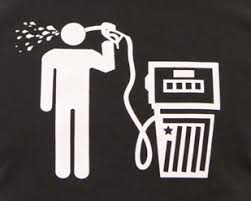
A 'progressive' and 'free' India has decided that men are evil - especially husbands. It has enacted discriminatory laws, which lay the burden of proof on husbands and their families, including women, on the basis of a wife's complaint.

Considering the disproportionate amount of NGO activism on this law, it raises questions about the motives and funding of these NGOs. In case you have not already guessed, the biggest source of funding for these NGOs is the West.

The Odious Section 498

Possibly the best 'example' of post-colonial legal thinking is the Section 498. A retributive, revengeful law (patterned on Western legal models) is now undermining the very structure of Indian society – marriage. Section 498 has has taken away marriages from the social domain into the legal sphere.

From being contributory, accommodating, religious and life long, Indian marriage system is becoming extractive, adversarial, contractual, legal and short term. Some in the West do see the value in the Indian system – but India seems to think that West is a way out!

On September 5th, 2008, the Times Of India reported that the Indian Government may review the section 498 law. The report talked about how

“For long, voices raised against the anti-dowry act were dismissed as those belonging to men desperately trying to retain their dominance over women. But now, an increasing number of women complaining against misuse of the act has forced the women and child development (WCD) ministry to initiate a review of the controversial legislation.

The government’s turnaround comes after an increasing number of complaints came from women themselves — mothers-in-law and sisters-in-law who ironically have fallen victim to the misuse of the two laws.

The statistics are telling. Raksha, an NGO working on marital harmony and child welfare, has analysed figures by the National Crime Records Bureau to deduce that 1.2 lakh women have been falsely implicated under 498A.

‘‘Every 21 minutes, an innocent woman is being arrested. While the number of arrests under 498A are increasing every year, what is not being considered is that the conviction rate in these cases is barely 2%,’’ Anupama Singh, Raksha spokesperson said.

Media and academia

The media looks at these 'battered' husbands in a amused manner - as the recent media coverage of the Shimla conclave demonstrated. The only newspaper which toned this matter objectively was the Deccan Herald of Bangalore. Most newspapers had amateur cartoonists trying to raise a laugh - some of which are linked to this post.

Of course the English language media raises no questions about the agenda of these NGOs, the sources and their activities.

Makes one think!

Targetting Yeddyurappa

Addressing a press conference after a day-long meeting of the chief ministers convened by the government, Home Minister P Chidambaram said the central government is considering establishment of regional intelligence centres (RICs) to train personnel in intelligence gathering and analysis in view of the grossly inadequate training facilities at present.

He said the states also proposed central procurement of weapons, continuation of the modernisation of police forces (MPF) scheme and a more effective instrument to expedite the road building programme in border as well as Naxal affected areas.

Noting there were 230,000 job vacancies in the constabulary when the last meeting of the CMs was held in January, Chidambaram said the situation had improved and now the number had dropped by almost two-thirds to 150,000. Efforts were also under way to recruit some 84,000 personnel, he added. (via The Tribune, Chandigarh, India - Nation).

While the nation is worried

So, while the nation's chief ministers were in conference on the terrorism issue, the media was fed with such photographs. On two consecutive days, the Times Of India carried these two photographs. These photographs are no accident.

I am sure all Chief Ministers must have had their forty winks. As anyone can imagine, in public life, sleep is a luxury. 'Someone' had to instruct the photographer(s) to target Yeddyurappa - and 'catch' him, when he is catching his forty winks.

The media is playing games

The media, (at least some sections) are targetting the 'new star' in the BJP firmament. After all who would have imagined even two years ago, that BJP will single-handedly capture a Southern state. And I am sure the BJP national leaders had little role to play in the BJP win in Karnataka. These attempts to 'take down' a new star' in the BJP firmament, points to media's complicity in these political games.

Shame on you Times of India.

New Evidence for Silk in the Indus Valley - Irene Good | Papers | Academia.edu

New Evidence for Silk in the Indus Valley

Archaeometry (reprint) 2009

Silk is an important economic fiber, and is generally considered to have been the exclusive cultural heritage of China. Silk weaving is evident from the Shang period c. 1600-1045 BC, though the earliest evidence for silk textiles in ancient China dates to a millennium earlier. Recent microscopic analysis of archaeological thread fragments found inside copper and steatite beads from two important Indus sites, Harappa and Chanhu-daro, have yielded silk fibers, dating to c. 2450-2000 BC. This study offers the earliest evidence in the world for any silk outside China, and is roughly contemporaneous with the earliest Chinese evidence for silk. This important new finding brings into question the traditional historical notion of sericulture as being an exclusively Chinese invention. (via Irene Good | Papers | New Evidence for Silk in the Indus Valley - Academia.edu; with a thanks to 'galeo rhinus' for this pointer).

Indian silk

India has two indigenous silk worms - one in the North East, which produces the Tussar silk. And the other is the one found at the Deccan plateau - which produces the Mysore silk. Both these are different from the Chinese silk-worm.

It has long been believed by Western historians (and their Indian chelas), that nothing good could have come out from India - except the zero!

To anyone, who has dealt and understands Indian silk would have realized that Indian silk industry was not a case of 'industrial espionage' from China - as alleged. It was homegrown.

This recent find proves just that.

Coming next ...

And there is more, where this came from! Indus Valley happens to be oldest, abandoned site that the West has discovered. What about living cities - where people have lived for more than 5000 years. Western diffidence about Indian history is well grounded. It has the ability to blow apart all their constructs.

And that can be a cause for real worry!

'We needed to make a demon of Jinnah... Let's learn from our mistakes'

Could Advani have made such a misstep ...!

How seriously has India misunderstood Jinnah?

I think we misunderstood because we needed to create a demon.

We needed a demon because in the 20th century, the most telling event in the entire subcontinent was the partition of the country.

Your book reveals how people like Gandhi, Rajagopalachari and Azad could understand the Jinnah or the Muslim fear of Congress majoritarianism but Nehru simply couldn't understand. Was Nehru insensitive to this?

No, he wasn't. Jawaharlal Nehru was a deeply sensitive man.

But why couldn't he understand?

He was deeply influenced by Western and European socialist thought of those days. Nehru believed in a highly centralised polity. That's what he wanted India to be. Jinnah wanted a federal polity.

Because that would give Muslims the space?

That even Gandhi understood.

You conclude that if Congress could have accepted a decentralised federal India, then a united India, as you put it, “was clearly ours to attain”. Do you see Nehru at least as responsible for partition as Jinnah?

He says it himself. He recognised it and his correspondence, for example with the late Nawab Sahab of Bhopal, his official biographer and others. His letters to the late Nawab Sahab of Bhopal are very moving.

(via 'We needed to make a demon of Jinnah... Let's learn from our mistakes').

A 'victorious' Congress, ruling for most of the 60 years of post-colonial India, had three clear propaganda imperatives.

1 - TINA, There is no alternative

They needed to prove that it was only the Congress which could 'take on' and 'defeat' the 'glorious and the mighty' British Empire on which the sun never set. The logic went, "what could India(ns) have done without the Congress". This thinking went deeper and dirtier, when a certain Deb Kant Barooah, declared "India is Indira and Indira is India."

Fact is, that Britain was bankrupt and could not hold onto India. Fact is, that for a 150 years - from 1797-1947, many rebellions, wars, individual hits were made against the colonial British Government. The myth of non-violent Indian freedom movement, served both colonial and Congress interests. It showed the British as 'civilized' colonialists - and the Congress as 'enlightened' leadership. Just like most Western literature caricatures African-American characters as hard-working, humble, docile, placid, obedient, gentle!

2 - If you don't have an enemy, create one!

The Congress needed to create an enemy. A demon, who they could blame, use, abuse - and Pakistan fitted the bill perfectly. A failed state (!), a hotbed of terrorism - and to top it all, an Islamic State. What more could the West-Congress combine ask for?

Easily slipping into colonial legacy of 'divide et impera', the Congress went onto a disastrous foreign policy trail of Hindi-Chini bhai bhai. A solid realtionship with Pakistan would have, arguably, saved Tibet from the Chinese maws - which Nehru's foreign policy predicated.

3 - Craven desires

To gain Western approval, acceptance, favours, privileges et al.

Consider the English language policy of the post-colonial Congress Government. It has massively subsidized English education in India so that the children of the elite could 'escape' to the West. The demeaning 'population control theory', the English language education - all, a result of this need of the Congress Party.

The deliberate colonial distortion of Indian history continues unchecked and unhindered. You only have to read Congress Prime Minister, Manmohan Singh's speech at Oxford, praising the Raj, while receiving his honorary doctrate, or Chidambaram's decision to end "abject poverty" in India that he seems to "have known for 5,000 years."

Coming to the BJP

When Advani goes to Pakistan and praises Jinnah, it cannot be an accident, or a slip of the tongue. It had to be a deeply thought out, well considered move - one can say, after watching Advani for nearly 30 years now. The man does not go out and missteps so wrongly. The 'Advani-Jinnah-comments-fracas' was for media consumption - and BJP party workers. If Advani wanted to re-write history (about time too), that was one way!

And if there were any doubts, then Jaswant Singh's book, seals the argument.

PS -

  1. Dutifully, within 48 hours, the BJP decided to 'expel' Jaswant Singh from the party, for his pro-Jinnah book on 19th August, 2009.

  2. Gujarat Chief Minister, Narendra Modi, promptly banned the book, in Gujarat. I see good sales for Jaswant's book - and rehabilitation of Jinnah in India, BJP willing.

  3. On 23rd August Arun Shourie, 'tore' into the BJP leadership on the subject of Jaswant's Singh's book. India Today reported that he said, "Jaswant Singh's book is a scholarly work. It deserves to be read,", criticising the party for pulling the Jinnah remark out of context of the entire book.

  4. One day later, on 24th August, KS Sudarshan, the former head of RSS weighed in on Jaswant Singh's side. It was reported that

"Jinnah had many facets. If you read history then you will come to know that Jinnah was with Lok Manya Tilak and was totally dedicated to the nation. And when Gandhi started the Khilafat movement, with the idea that currently we are opposing the British and if Muslims join in then their support will help gain independence. But at that time Jinnah opposed it saying that if the Caliph in Turkey has been dethroned, what has India got to do with it. That time nobody listened to him, which saddened him. So he quit the Congress and left for England and only returned in 1927," Sudarshan said.

Saturday, August 15, 2009

The de-hyphenation of India-Pakistan

India without hubris ... ?

I don’t agree with this Af-Pak solution at all because we are being bracketed with Afghanistan. Afghanistan hardly has any governance, it is out of control. And also, there is extremism within India among the Muslim youth and it is developing linkages with others — the Kashmir issue too. Therefore, if we want to finally deal with terrorism and extremism and solve it in its short-term and long-term perspective, we have to look at events in India, Pakistan and Afghanistan. I am totally against this Af-Pak strategy. (via 'Kashmir solution can reduce extremism in Pak society').

Pleasures of growing up

A few decades earlier, India-Pakistan sporting encounters were most awaited by sports enthusiasts. India-Pakistan cricket now comes lower down - and the position has been taken up India-Australia cricket series. Now Pakistan is asking David Morgan, from the ICC to 'intervene' and"to convince the BCCI to play a series in England" against Pakistan.

In the 60s-80s, Indian business publications, Indian bureaucracy indexed themselves with Pakistan. Sensex, the Indian stock index was then compared with the Karachi index. But the comparison is now with global markets and the US.

Then and now

The Indian economy is now compared with the Chinese economy, ASEAN, EU and the US economies. The Indian film industry, compares itself with Hollywood - unfortunately, in terms of becoming a Hollywood clone. India must now work to jettison some colonial detritus, its diplomacy must get over its Pakistan Fixation - and manage the Chinese relationship.

There are two aspects of this 'development that has not fully dawned on Indians, which needs greater introspection in India. One is the 'Western clone' status - which, for instance, is what some 'leading lights' of the Indian film industry want to be. The second is danger of becoming an 'arrivista' - the danger of hubris.

Hard landing for Pakistan

Obviously, this growing up is something that has dawned on Pakistan - as a 'hard imprint' rather than a 'soft copy'. Fancying themselves as an equal till a few decades ago, Pakistan had to endure a hard landing.

And this hard landing is Musharraf's real problem - as this interview reveals.

Friday, August 14, 2009

Global warming's got me thinking

Carbon credits ... anyone?

a call has been given by Al Gore that there should be an immediate moratorium on coal fired power plants. Look at how this will impact India. More than half of the 8,00,000 mega watts of power India plans to produce by 2030 are to come from coal fired plants. Simply because India has abundant coal resources.

What most western analysts don't realise is nearly 600 million Indians do not have regular and formal access to any source of electricity. If comparison is to be drawn, it is a bit like the entire US population and half of the European Union going without any electricity.

Can you estimate the enormity of this problem? This is what Prime Minister Manmohan Singh told George Bush at the G-8 summit in Japan last year when America tried to force India to commit carbon emission cuts. India merely said it will keep its per capita emmissions at below the world average. (via Carbon emmisions and Democracy!:Wisdom by Hindsight:MK Venu's blog-The Times Of India).

What if

The entire global warming debate is just a facade to keep up demand for oil from India and China. The opposition to coal fired power plants is to stop India and China from reducing the growth in oil consumption.

After all practically all of British GDP today is declining North Sea oil and British Petroleum. Apart from Chinese money, the other source of liquidity which keeps the US afloat is petro dollars.And the US future is so closely linked to Arctic oil.

If India and China were to reduce their reliance on oil, leading to a price collapse, the biggest losers will be the Anglo Saxon bloc.

Makes one think!

Thursday, August 13, 2009

China is now an empire in denial – Gideon Rachman /FT.com / Columnists /

The Soviet Union ultimately fell apart because of pressure from its different nationalities. In 1991, the USSR split up into its constituent republics.

Of course, the parallels are not exact. Ethnic Russians made up just over half the population of the USSR. The Han Chinese are over 92 per cent of the population of China. Yet Tibet and Xinjiang are exceptions. Some 90 per cent of the population of Tibet are still ethnic Tibetans. The Uighurs make up just under half the population of Xinjiang. Neither area is comfortably integrated into the rest of the country – to put it mildly. Last week’s riots in Xinjiang led to the deaths of more than 180 people, the bloodiest known civil disturbance in China since Tiananmen Square in 1989. There were also serious disturbances in Tibet just before last year’s Olympics.

In a country of more than 1.3bn people, the 2.6m in Tibet and the 20m in Xinjiang sound insignificant. But together they account for about a third of China’s land mass – and for a large proportion of its inadequate reserves of oil and gas. Just as the Russians fear Chinese influence over Siberia, so the Chinese fear that Muslim Xinjiang could drift off into Central Asia. (via FT.com / Columnists / Gideon Rachman – China is now an empire in denial).

Cheap thrills

The Western media takes great and vicarious delight in predicting such break ups. It feeds their innate (though false) sense of superiority. With Scotland wanting to breakaway, Belgium on the verge of splitting into two, Czechoslovakia split into two, Europe itself on the brink of reverting to internecine squabbles.

Chopsuey

That said, a break up of China should be no surprise.

Much like USSR’s break-up, the Chinese monolith is more fragile than apparent. Apart from the usual suspects of democracy, economic disparities, social upheavals, etc, there are 3 factors, which most Chinese analysts miss.

One, the Tibetan’s are held together by force – and no one imagines that this holding them together by force, can be in perpetuity. The Muslim provinces of Xinjiang (another one-third of China) is usually ignored. These issues are usually minimized by the current strength with which China holds these provinces together.

But possibly, the biggest issue is the share of revenues of the Chinese central governments.

Secondly, the Chinese Central Government commands less than 25% of the total tax revenues - and the 75% goes to provinces. This, possibly is why the Chinese Government cannot reduce cigarette usage in China. Most expenditures on health, education, pension, unemployment, housing etc. are borne by the local government – and hence there is patchwork of systems which run across China. Most of executions and imprisonments of bureaucrats (including the Mao’s Cultural Revolution) is to demonstrate central authority. The PLA is the only factor that keeps China together. A Chinese Lech Walesa or a Nelson Mandela could unwind China very quickly.

Significantly, and thirdly, the Chinese diaspora and Western MNCs are biggest investors in China – and also the main beneficiaries. This currently keeps resentments of the local Chinese under control – as the neighbour is not getting much richer. But at one stage the domestic Chinese will want to greater say and control over the Chinese economy. He may not be happy with just a well paying job and abundant, low quality goods.

Fences and neighbours

Modern nationalism (of the political variety) is a European construct. National boundaries have historically been ephemeral. The value of national boundaries is the ability to wage war – and disturb the boundaries of other countries.

Good fences create bad neighbours!