Showing posts with label Anglo Saxon bloc. Show all posts

Sunday, November 8, 2009

RBI to buy 200 tonnes of IMF gold

RBI’s decision to shore up its gold reserves needs to be seen in the context of other central banks across the globe increasing their gold reserves. Among them are the central banks of China, Russia and a few countries in the European Union.

In the last one year, China has increased its gold holdings, by weight, by 75.69%, Russia by 18.78%, the Philippines by 18.50% and Mexico by 108.91%.

Compared with this, India’s central bank did not add anything to its gold reserves in the last one year, according to Bloomberg data. (via RBI to buy 200 tonnes of IMF gold – Home – livemint.com).

Two years ago …

2ndlook had estimated that the Chinese could possibly (and they have) increase their monetary gold reserves. On April 24th, 2009, Bloomberg reported that China had increased

its (gold) reserves by 454 tons to 1,054 tons through domestic purchases and refining scrap metal, Hu Xiaolian, head of the State Administration of Foreign Exchange, said in an interview with the Xinhua News Agency today. China, the world’s biggest gold producer, has increased its holdings before, Hu said in the interview carried on the administration Web Site. They rose from 394 tons to 500 tons in 2001 and to 600 tons in 2003. The U.S. has the world’s biggest gold holdings at 8,134 tons, followed by Germany with 3,413 tons, World Gold Council data show. France has 2,487 tons and Italy 2,452 tons, while the IMF has 3,217 tons, according to the council.

Another report, from Market Watch, a WSJ web publication added,

The increase makes China the world’s fifth-largest holder of gold, just ahead of Switzerland, and among the six nations plus the International Monetary Fund that have reserves of more than 1,000 metric tons. Although Hu did not elaborate on where China had sourced the additional bullion, her comments were interpreted as meaning they came from domestic sources and may included refining of scrap metal. Traders also say the gold was accumulated systematically over a number of years. Last year China ranked as the world’s largest gold producer with 12.2% of world output, equivalent to 288 metric tons. The U.S. ranked second with a 9.9% share, or 234 metric tons.

What are the future plans of the Chinese? A report quotes an analyst

China should increase its gold reserve from 600 tons to about 2,500 tons in a short term and to 3,000 tons in a long term to cope with the versatile exchange rate risks, said Teng Tai, an economist of China Galaxy Securities Company.

Exactly …

This really does not mean much – except that it may keep gold prices on boil. Whether a currency is backed by 5% or a 10% gold reserve makes no material difference, especially in this era of rampant use of (not just by the US of A) “a technology, called a printing press” as an economic tool. For long term economic stability, gold needs to be in the hands of individuals – and not Governments.

Why India

Since China is a significant gold producer by itself, it may not get a shot at buying IMF gold. India has negligible domestic gold production -and was possibly therefore given preference by the IMF. Of course, preference may have been given to RBI’s purchase, given its ‘responsible’ and ‘mature’ behaviour during the current Great Recession.

What does RBI’s gold purchase mean

RBI’s gold purchase means two things.

The Indian Government which has had a rather low percentage of gold holdings as their currency reserves will now bolster these reserves. Even after this purchase, Indian official reserves, will only be the ninth largest in the world in absolute terms.

On average, countries hold about 12.6% of their reserves in gold, up from 9.9% a year ago. Some of this represents an increase in gold holdings, but another driver of the increased proportion is the rise in the value of gold. (from India propels gold to new high.)

The overhanging threat of open market sales by the IMF, speculated by many and discounted by 2ndlook, now stands neutralized. This will be a kicker to gold prices in the short term.

The ideal thing …

Sell gold to individuals. Governments should not have such large holdings of gold. Gold in the hands of Governments is the prime cause of war. Gold holding should be widely dispersed, as widely as possible, amongst individuals – like the Indian gold possession model. No national government, in the new financial architecture should be allowed to have more than 250 tons of gold – to progressively reduce to 50 tons.

Thursday, August 27, 2009

Cong plans defend-Nehru movement

Propaganda Wars

The sudden rise in the Congress decibel level was prompted by former RSS chief K S Sudarshan’s statement calling Jinnah secular. “Over the past 10 days the successors of Mahatma Gandhi’s assassins have been trying to distort history,” Tiwari said.

Ascribing the fullsome praise of Jinnah to the Sangh Parivar’s attempt to “secularise themselves by proxy”, he termed the Pakistan founder as a “British stooge” and claimed that nobody was more communal than him. “If somebody was responsible for Partition undoubtedly it was Jinnah,” he said.

Tiwari claimed that such approval of Jinnah could easily come from the BJP-RSS leadership because “they had no role in the freedom struggle”. He said these comments were a direct assault on the history of the freedom struggle. In the party’s estimate, Nehru was not just the chief architect of the modern Indian state but its ideological propagator as well. (via Cong plans defend-Nehru movement).

A ‘victorious’ Congress, ruling for most of the 60 years of post-colonial India, had three clear propaganda imperatives.

1 – TINA, There is no alternative

They needed to prove that it was only the Congress which could ‘take on’ and ‘defeat’ the ‘glorious and the mighty’ British Empire on which the sun never set. The logic went, “what could India(ns) have done without the Congress”. This thinking went deeper and dirtier, when a certain Deb Kant Barooah, declared “India is Indira and Indira is India.”

Similarly, Congress decided to re-write history and take all credit for the departure of the British colonialists. Contributions of leaders like SC Bose was ignored or the importance of the February 1946 joint action by the Indian Armed Forces against the colonial forces, was minimized to the ‘Naval Ratings Mutiny.’ Leaders like VD Savarkar (the first to write a non-colonial history of the War of 1857), or Shyama Prasad Mukherjee (the founder of the Jana Sangh-BJP) was dismissed as fascism.

Fact is, that Britain was bankrupt and could not hold onto India. Fact is, that for a 150 years – from 1797-1947, many rebellions, wars, individual hits were made against the colonial British Government. The myth of non-violent Indian freedom movement, served both colonial and Congress interests. It showed the British as ‘civilized’ colonialists – and the Congress as ‘enlightened’ leadership. Just like most Western literature caricatures African-American characters as hard-working, humble, docile, placid, obedient, gentle!

2 – If you don’t have an enemy, create one!

The Congress needed to create an enemy. A demon, who they could blame, use, abuse – and Pakistan fitted the bill perfectly. A failed state (!), a hotbed of terrorism – and to top it all, an Islamic State. What more could the West-Congress combine ask for?

Easily slipping into colonial legacy of ‘divide et impera’, the Congress went onto a disastrous foreign policy trail of Hindi-Chini bhai bhai. A solid realtionship with Pakistan would have, arguably, saved Tibet from the Chinese maws – which Nehru’s foreign policy predicated.

3 – Craven desires

To gain Western approval, acceptance, favours, privileges et al.

Consider the English language policy of the post-colonial Congress Government. It has massively subsidized English education in India so that the children of the elite could ‘escape’ to the West. The demeaning ‘population control theory’, the English language education – all, a result of this need of the Congress Party.

The deliberate colonial distortion of Indian history continues unchecked and unhindered. You only have to read Congress Prime Minister, Manmohan Singh’s speech at Oxford, praising the Raj, while receiving his honorary doctrate, or Chidambaram’s decision to end “abject poverty” in India that he seems to “have known for 5,000 years.”

When each of these elements are looked at in isolation, we can take benign view of these actions. When looked at collectively, it forms a clear pattern.

A rather ominous pattern.

Saturday, August 22, 2009

'IT players failed us in financial inclusion drive'- says the RBI

The rich target the poor ...

The Reserve Bank of India (RBI) has accused IT giants of being indifferent towards the cause of financial inclusion in India. “The scale of business in financial inclusion is so big that we need participation from big IT companies,” said KC Chakrabarty, deputy governor, RBI, speaking on the sidelines of a financial inclusion seminar organised by Skoch, a consultancy firm. He added lack of interest and involvement by big IT companies was making banks’ endeavour of financial inclusion unsuccessful.

According to Mr Chakrabarty, involvement of big IT companies was important to bring down the transaction cost. (via 'IT players failed us in financial inclusion drive' - The Economic Times).

How India missed out …

Due to our well-cultivated tunnel vision about English language (amongst many other things), India missed out on Japanese investments, technology and business. Indian loyalty to English language exceeds the loyalty of the British themselves to their language – and we refuse to see how this affects us.

Reforming Indian education

India urgently needs to put more languages in lingual-education basket – instead of putting all our eggs in the English language basket. We can't do business with the French or Germans, Spanish or the Arabic speaking world. The Chinese and Japanese are out of bounds to us – as are the Swahili and the Bantu.

The Indian language basket also calls for diversification. India needs to learn more foreign languages. But with our bankruptcy of ideas on restructuring Indian education system or the vested interest banging begging bowls in front of the Indian tax payer!

The Indian software 'success'

The great ‘software' success story is actually two countries – US and UK who give between 70%-80% of Indian software business! This is coolie labour! We are missing out on the massive Japanese, French and the Spanish markets because we have not invested in those foreign languages. Same story in Europe also – major opportunities overlooked and ignored. And we have missed out on computing in Indian languages, because we have not invested there either. So, RBI's peeve is right - but the solution is somewhere else.

Is it due to the apparent Indian decision to tie its future to the sinking ship of the Anglo Saxon Bloc?

Saturday, August 15, 2009

The de-hyphenation of India-Pakistan

India without hubris ... ?

I don’t agree with this Af-Pak solution at all because we are being bracketed with Afghanistan. Afghanistan hardly has any governance, it is out of control. And also, there is extremism within India among the Muslim youth and it is developing linkages with others — the Kashmir issue too. Therefore, if we want to finally deal with terrorism and extremism and solve it in its short-term and long-term perspective, we have to look at events in India, Pakistan and Afghanistan. I am totally against this Af-Pak strategy. (via 'Kashmir solution can reduce extremism in Pak society').

Pleasures of growing up

A few decades earlier, India-Pakistan sporting encounters were most awaited by sports enthusiasts. India-Pakistan cricket now comes lower down - and the position has been taken up India-Australia cricket series. Now Pakistan is asking David Morgan, from the ICC to 'intervene' and"to convince the BCCI to play a series in England" against Pakistan.

In the 60s-80s, Indian business publications, Indian bureaucracy indexed themselves with Pakistan. Sensex, the Indian stock index was then compared with the Karachi index. But the comparison is now with global markets and the US.

Then and now

The Indian economy is now compared with the Chinese economy, ASEAN, EU and the US economies. The Indian film industry, compares itself with Hollywood - unfortunately, in terms of becoming a Hollywood clone. India must now work to jettison some colonial detritus, its diplomacy must get over its Pakistan Fixation - and manage the Chinese relationship.

There are two aspects of this 'development that has not fully dawned on Indians, which needs greater introspection in India. One is the 'Western clone' status - which, for instance, is what some 'leading lights' of the Indian film industry want to be. The second is danger of becoming an 'arrivista' - the danger of hubris.

Hard landing for Pakistan

Obviously, this growing up is something that has dawned on Pakistan - as a 'hard imprint' rather than a 'soft copy'. Fancying themselves as an equal till a few decades ago, Pakistan had to endure a hard landing.

And this hard landing is Musharraf's real problem - as this interview reveals.

Friday, August 14, 2009

Global warming's got me thinking

Carbon credits ... anyone?

a call has been given by Al Gore that there should be an immediate moratorium on coal fired power plants. Look at how this will impact India. More than half of the 8,00,000 mega watts of power India plans to produce by 2030 are to come from coal fired plants. Simply because India has abundant coal resources.

What most western analysts don't realise is nearly 600 million Indians do not have regular and formal access to any source of electricity. If comparison is to be drawn, it is a bit like the entire US population and half of the European Union going without any electricity.

Can you estimate the enormity of this problem? This is what Prime Minister Manmohan Singh told George Bush at the G-8 summit in Japan last year when America tried to force India to commit carbon emission cuts. India merely said it will keep its per capita emmissions at below the world average. (via Carbon emmisions and Democracy!:Wisdom by Hindsight:MK Venu's blog-The Times Of India).

What if

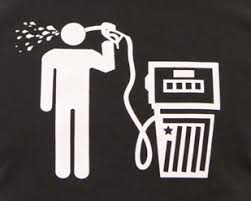
The entire global warming debate is just a facade to keep up demand for oil from India and China. The opposition to coal fired power plants is to stop India and China from reducing the growth in oil consumption.

After all practically all of British GDP today is declining North Sea oil and British Petroleum. Apart from Chinese money, the other source of liquidity which keeps the US afloat is petro dollars.And the US future is so closely linked to Arctic oil.

If India and China were to reduce their reliance on oil, leading to a price collapse, the biggest losers will be the Anglo Saxon bloc.

Makes one think!

Thursday, August 13, 2009

Emulate Gujarat’s agricultural success – The Economic Times

Gujarat is a drought-prone state, with an irrigation cover of just 36% of gross cropped area. Increased water supply from Sardar Sarovar project, higher investments in check-dams and watersheds (as of June 2007, a total of 2, 97,527 check dams, boribunds and Khet Talavadi (farm ponds) had been constructed by the state in cooperation with NGOs and the private sector), and of course, good rainfall for the past few years has helped propel growth. (via Emulate Gujarat’s agricultural success- Policy-Opinion-The Economic Times).

Indian economic model

There is something interesting in the state of Gujarat. Sometime back there was a status report on finances of all state governments in India. The difference between Gujarat and the Rest of India was stark and telling. Very impressive.

While we have Westernized ‘experts’ saying that Indian agriculture is a dead end - and promoting a line of ‘there is no option apart from mega projects’, we have here in Gujarat the real solution to agriculture and water management. The Gujarat solution, which has been India’s way of managing water. Effectively, at a low cost, under the control of the people who use it and need it. Indian agriculture has a bright future – these ‘experts’ notwithstanding.

Which makes me think.

With Chief Minster’s like Yeddyurappa in the South and Narendra Modi fom the West, what BJP needs is two more Chief Ministers. One for the North and one for the East. To break the logjam at the national level. The last two electoral defeats at the national levels has seen BJP in disarray.

But at the state level it is a different story. More power to such Chief Ministers.

Tuesday, August 4, 2009

As the sun set on the Raj ...

One evening in early August 1943, Brigadier General Mortimer Wheeler was resting in his tent after a long day of poring over maps, drawing up plans for invasion of Siciliy. Mortimer Wheeler was invited to become the director general of archaeology by the India Office of the British government in its last years of rule in South Asia ...Summoning a general from the battlefields of Europe was an extraordinary measure, an admission both of the desperate condition of Indian archaeology and an acknowledgment of its vital importance. (from The Strides of Vishnu: Hindu Culture ... - Google Books).

Amazing!

This is one question that has long puzzled me!

Why would the glorious British Empire, on which the sun never set, struggling for its very existence, in the middle of WW2, suddenly pull a general back from the battlefield - and put him into archaeology! Especially, when it was clear that they would be departing from India - sooner rather than later.

Just why

Considering what theories came from Mortimer Wheeler's rather fertile 'imagination' and his rigourous archaeological process, raises even more questions. There may be the facile answer that the British were after all 'searching for history and truth'.

It is this one incident which possibly contains answers to many unanswered questions like: -

  1. The amount of energy expended by the West in defending the Aryan Invasion /Migration Theory,

  2. The lack of access to Indian scholars of the archaeological sites in Pakistan,

  3. The many myths in Indian history,

  4. The clues to the partition of India

  5. The dating problems
et al.

Again ... just why?

Just why would an imperial power, struggling for its very existence, suddenly pull a general from the battle field, in the middle of WW2 - and put him onto the job of digging dirt.

Only one explanation fits - it had to be a struggle for a existence at a higher level!

Sunday, July 12, 2009

Historian on a mission to save little-known Buddhist caves in Mumbai - The Times of India


Two years ago, a historian, while researching traditional Indian methods of water harvesting, stumbled upon a series of ancient Buddhist caves in Borivli, which its custodians scarcely knew or cared about.

Initially, she was scared that the historical caves would crumble under the weight of the slum colonies that encroached upon them, but now she fears that the construction works being conducted on an adjacent plot might bring the structures down. (via Historian on a mission to save little-known caves - The Times of India).

While India has managed to obtain funding for 'saving' the gargoyle-infested colonial railway structures from UNESCO, breast beating activists have managed to increase awareness of structures funded by colonial loot and drug trade (of opium).

In all this, two things are forgotten.

One - Colonial versions show the start of Mumbai's history when the Portuguese gave Mumbai as dowry to the British in 1661 - including a Government of Maharashtra website.

If there was no Mumbai before the British, where did these Buddhist caves (at Magathane, Kanheri, etc.) come from? Or did I miss the 'fact' that British first came to India in the 2nd century, made these Buddhist caves - and came back again to India in the 17th century, built these Gothic Victorian structures, and went away - which we 'uncultured' Indians are trying to save?

Two - The liberal establishment in India is worried about all the colonial 'heritage' and structures. Old Mumbai mills are included - but not the even more ancient Buddhist structures. The Mumbai Municipal Commissioner, while decrying the attempts by the Indian neo-Colonial Rulers, to 'save' Mumbai colonial past, makes no mention of these Buddhist caves. While Kipling's bungalow is a 'hallowed' institution, these Buddhist caves are dying of 'active neglect'.

Wednesday, June 24, 2009

Foreign education takes a hit

Out of the around 93,000 students in Australia, over 40 chose to fly back in the wake of the racially motivated attacks. International education is the third largest source of overseas earnings for Australia, generating around US$12 billion in 2008 and supporting more than 125,000 jobs in the country. (via Foreign education takes a hit).

This one hurts ...

After all, which self-respecting, WASP (‘White, Anglo Saxon, Protestant’) Nation would like to be dependent on us dirty and crass Indians!

Bad feeling, huh!

Some people do think that that Indians are of no ‘use to Australia in industry or as a market’. Education happens to be the third largest revenue stream for Australia – after raw materials and tourism. And Indians, by the way, are significant consumers for Australian raw minerals and tourism also.

Anyway, such concerned people should let their Government know about these ‘new found facts’. Because the Australian Government is trying its best to attract Indian tourists to Australia – just like they tried to attract Indian students.

Thursday, June 18, 2009

BRIC demands more clout, steers clear of dollar talk - Yahoo! Philippines News

Change is indeed on its way

"The summit of the so-called BRIC nations of Brazil, Russia, India and China ended with a short statement by Russian President Dmitry Medvedev and a communique that demanded more power for developing nations in international financial institutions and the United Nations.

'We are committed to advance the reform of international financial institutions, so as to reflect changes in the world economy,' the BRIC countries said in a joint communique.

'The emerging and developing economies must have a greater voice and representation in international financial institutions,' it said. 'We also believe that there is a strong need for a stable, predictable and more diversified international monetary system.'

"We will not do without additional reserve currencies," he said, adding that a new supranational reserve currency was also an option as the IMF's SDRs gained a bigger role.

The initial response from the developed world to Russia's initiative came from Japan, where Finance Minister Kaoru Yosano reiterated his view that the dollar will remain the world's key reserve currency. (via BRIC demands more clout, steers clear of dollar talk - Yahoo! Philippines News).

This was predictable

The 2ndlook posts and the Quicktakes on the events in the unfolding global financial crisis have been pre-casting these developments. This meeting was good news. This meeting could not have happened earlier – with elections in India being the delaying proposition.

The meeting has happened. Some old and tired cliches have been shopped out for waiting media. Greater role for BRIC in UN and IMF … is not even old wine (turned vinegar) in a old cracked bottle.

What’s gonna happen

The Chinese and Russian decision to increase holdings of their each others currencies was good development. The greater role for ‘IMF-SDR’ is eye wash. The BRIC leaders know well enough that the West will not let go of the IMF and the UN. But the charade is possibly required – and they are going through it.

The real developments will happen more quietly. After all, the final outcome is something that they, The BRIC nations would like to reveal with fanfare and celeberation.

We live in exciting time ... or is this a dangerous time?

Wednesday, May 13, 2009

The China Syndrome – The Times of India

Wall Street mayhem

post-reform the US will retain its de facto veto power with a 17 per cent share and the US, EU and Japan will together still control 53 per cent of IMF shares. Individually, the shares of US, Japan, UK and France will still be larger than China's share of under 4 per cent. Impatient with these little handouts, China has launched a multi-pronged campaign to claim a seat at the head of the table.

Shortly before the G20 summit, Zhou Xiaochuan, governor of the Chinese central bank, suggested that the dollar should be replaced by SDRs as the new reserve currency. The huge dollar reserves held by central banks and other global investors would be severely eroded if the dollar were to suddenly depreciate. Yet, these investors cannot easily diversify away from the dollar since this itself would trigger dollar depreciation. The Chinese are particularly concerned: an estimated $1 trillion out of their total reserves of around $2 trillion are held in dollar assets. The SDR exchange rate is a weighted average of exchange rates of the major convertible currencies. Accordingly, under Zhou's proposal, China and other countries could convert their reserves from dollars to SDRs at current exchange rates without any erosion in their value. via TOP ARTICLE | The China Syndrome - Editorial - Opinion - The Times of India).

Rather a good summary of the flux in global currency system - for someone who wants to understand the situation today. The last paragraph will be of interest to everyone - especially Indians.

The relative roles of different Asian currencies in this fund are yet to be determined, but clearly the Chinese yuan has arrived and the meltdown of the dollar as a reserve currency has begun. The US-led western alliance has two options before it. It can give China a leading role in the G7-dominated financial architecture or face an alternative architecture led by China. Heads i win, tails you lose. Meanwhile, India is yet to find a role for itself in this new great game.


Wednesday, May 6, 2009

Old order changeth …

For the opportunity to make a mark is more at state level, where the administrative unit is small enough for a strong-willed and focused chief minister to be able to make a difference. No one took notice of Nitish Kumar when he was in New Delhi, but he has now made a reputation for himself as chief minister in Bihar, in just 41 months. The same goes for Naveen Patnaik (anyone remember the portfolio he held as a central minister?), who stands tall in Orissa. The examples of Chandrababu Naidu in Andhra Pradesh and Digvijay Singh in Madhya Pradesh have been touted often enough, but there are more contemporary examples too, like Narendra Modi in Gujarat—who has outshone all the BJP leaders in New Delhi who saw themselves as the inheritors after the Vajpayee-Advani era. Vasundhara Raje Scindia had a similar opportunity in Rajasthan, but she muffed it. Now there is growing recognition of Shivraj Singh Chauhan in Madhya Pradesh and Raman Singh in Chattisgarh. Even Buddhadeb Bhattacharjee was beginning to acquire star value, till Nandigram and Singur happened. (via Business-Standard).

Midnight’s children

Interesting editorial.

It brings out one interesting development. LK Advani (?) and Manmohan Singh are possibly going to be the last colonial-era Prime Ministers of India. The next generation of political leaders will be Indians who have grown in the post colonial India.

Colonialism is hearsay, propaganda, exaggerations – a second hand experience, to most young post-colonial Indians. Brought up on a diet of nation building, socialism, (opportunistic) English education, limited exposure to the rest of the world, they have seen rapid change. From an India, which was a ship-to-mouth basket case, to an emerging power, seems to be have been a facile and an easy experience - with little credit being given to Indian political leadership for managing the post-colonial Indian system.

The One Solution to all problems

In the immediate post-colonial India, for every problem, there were two common remarks. One, “The Government should do something about this.” The second was, “It is not like this in foreign countries.” Whether it was overflowing drain or a pothole on the road. Looking back, things have changed.

Over the years, Indians use this phrase less and less. These phrases are now close to becoming either extinct or may even become a parody. It may make its way into Indian films as a joke.

Success … hubris …caution

On one side it makes them brash - but more dangerously, it makes them see the future simplistically, as a case of just adopting or modifying the Western model to suit Indian requirements. This is in itself may not objectionable, but for the fact, that most of the new leaders have been fed on a staple diet of Western propaganda - where the elephants in the Western rooms have become all but invisible. Don’t believe me - look at Chidambaram saying that he wants to end 5000 years of Indian poverty.

Elephants in the room

Western models, which have evolved through the prism of slavery, colonialism, genocide, concentration of power are an end-of-life model. To use end-of-life products may like like a low cost solution in the short run, the bigger issue in most cases is the lock-in effect that these legacy systems impose on the ‘buyers’.

This, then may become the biggest risk in the future - the mute and blind acceptance of ‘dominant’ Western models. Aiding this risk is the English language education, which is one such legacy system, which has locked India into a high cost spiral of adopting decrepit Western models with decreasing returns.

India’s successes have been built on Indian models - and Western models have been singularly unsuccessful.

How will India’s young leader’s face up to this challenge? Will they ‘fall into the trap’ of copying successful countries or take the easier path of renewing the Indic model, which may initially, seem difficult.

Monday, March 30, 2009

Paper gold: Nice idea, but…

Having a central currency – let’s call it the Zhou-Triffin Doubloon (ZTD) – managed by a supra-national organisation would make it more difficult for any one country to get into too much debt to another. If the supply of ZTD in issue were controlled properly – say by expanding it in line with global GDP – it would serve as a steady store of value, with little risk of devaluation.

Moreover, a credible ZTD would have many of the advantages of the now-defunct gold standard. It would be strictly limited in supply and readily acceptable everywhere. Indeed, it would be even better than the yellow metal, which is after all too cumbersome for a modern economy and too scarce to serve as a measure for international trade. (via Paper gold: Nice idea, but...).

Obama is being advised ...
What would this mean ...

That a citizen's nightmare like the IMF and World Bank, answerable to non-one, or at least less answerable than any 'elected' Government, would rule the world currency system.

This would also mean practically immediate nationalization of gold in most countries - and restrictions on private ownership of gold.

This will also finally end with mind numbing WTO type negotiations. The West will find newer and more devious ways tyo gain advanatage; like the recent IPR related seizures of pharma products shows.

Concentration Of Power

Today the most popular methods are the Fortune 500 listing and the Forbes listing. These listings finally demonstrate that half the world’s economic output is controlled by 50 people from 500 companies - about 25,000 individuals. Add another 25,000 politicians and bureaucrats. We have about 50,000 people managing the lives of 5 billion people.

Is this how debts will be repaid?
Everyone is saying …

There is rising chorus that President Obama should do what Roosevelt did. Krugman, this year’s Nobel prize winners, also said in an interview that Roosevelt’s actions need to be emulated. And what is it that Roosevelt did ...?

Roosevelt nationalized gold.

Apart from a lot of things that Roosevelt did, which can be debatable, this was the one thing that he did, that made the US into a super power - for a short while (of 70 years).

And the nationalization of gold also impoverished the Americans. Nationalization of gold enabled the US Governments to enter costly wars like WW2, Vietnam War, and now the Iraq and Afghan Wars. This allowed to US to walk into the WW2 with 25,000 tons of gold - and impose Bretton Woods on the world.

Gold production (from Ghana, South Africa, Australia, Canada, Papua New Guinea, America, etc.,) was controlled by the Anglo Saxon Bloc - and the world’s largest private reserves of gold, of India was controlled by the British. It is this choke on gold reserves that enabled the sustenance of US as a superpower.

And now they are trying it again.

Finger pointing ...
Many Think ... That There Are Many More Qualified …

Paul Krugman has been (allegedly) anti-Obama - and advising Obama to pay heed to Roosevelt’s policies. Was Krugman’s Nobel Prize award to help him to increase his ‘opinion making’ powers? Was the Nobel prize fixed to meet American /Western short term requirements? Was the Nobel prize given to the Paul Krugman to make his position strong - as a part of the Obama Dream Team - or as ballast against an ‘adventurous’ Obama who may not toe the line?

Will Krugman join Warren Buffet in rescuing the Western economic system? Will they nationalize gold again - and instead promote silver? Is a new version of the bi-metallic standard coming?

All thats left ...

Post dated cheque on a falling bank ...

Gandhiji advised Sir Stafford Cripps to the next plane back and his offer as as "post dated cheque on a falling bank." - which he later denied as having said it at all, though in agreement with the thought. And that is equally true of the US in particular and the West in general.

And one single global currency, is such a bad idea.

Monday, March 16, 2009

Voting your caste

As Bal Thackeray once said, Indians don't just cast their vote.

As Indians prepare not to cast their vote but “vote their caste”, as Bal Thackeray once said, our sadhus and sanyasis, mahants and maulvis, pundits and preachers must be rubbing their hands in glee.

Folk faith was common in the West too until the Age of Enlightenment and then the new economic order introduced by the Industrial Revolution led to mass education and material advance. That precursor of mental development encouraged the masses to aspire to elitist heights of thought and culture. In contrast, our elite is sinking to the level of the masses. India may lead the world in Information Technology and be able to send a man to the Moon, but the influence that the successors of Dhirendra Brahmachari and Chandra Swamy are increasingly gaining suggests that the intellectual revolution that is the essential key to modernity has passed us by. (via Sunanda K Datta-Ray: Voting your caste).

Caste by another name ...

Advanced West vs ignorant Indians

Now the US votes on the basis of gender (more women voters do vote for democrats), color (more Hispanics and African Americans generally vote Democrats), age (younger voters are traditionally democrats in larger numbers), religion (only one Catholic has become a US President), race (only WASP - White Anglo Saxon Protestants allowed real power).

Now Sunanda Datta K. Ray is a bad case of vacillation - sometimes pathos and sometimes bathos. Some of his columns (Have you eaten?) is memorable for its breadth - and then you see this kind of ignorance.

In US societal divisions are called demographics and is a matter of high academic interest.(click on this link to see an interesting device to gauge demographic effects in US elections). In India, the West uses a pejorative called the caste system. The US system has ensured that the US voter gets more (Republican) or less (Democrats) of the same swill. What choice does the US voter have? The Indian voter has created a choice for himself by voting for a wide range of issues, agendas and parties.

But then the Indian voter is unlettered, ‘uneducated’ and does not speak English - and Sunanda K. Datta Ray is possibly vernacularly challenged!!


Change in Voting-Age Population (VAP), 2000-2007: Selected Battleground States in 2008
State Total VAP increase Hispanic VAP increase
Share of Total VAP Increase
Selected racial/ethnic groups Metropolitan areas
Traditionally Republican States
Colorado 15% 32% Hispanics: 32% 47% in Denver
North Carolina 12% 53% African Americans: 23%
Hispanics: 18%
29% in Raleigh-Durham
25% in Charlotte
Virginia 10% 51% Hispanics: 21%
African Americans: 21%
Asian Americans: 15%
47% in Northern Virginia
(including exurbs)
Traditionally Democratic States
Pennsylvania 3% 44% Hispanics: 38%
African Americans: 24%
Asian Americans: 20%
40% in Philadelphia suburbs
Swing States
Florida 15% 40% Hispanics: 42%
African Americans: 19%
19% in Miami-Fort Lauderdale
16% in Orlando
14% in Tampa-St. Petersburg
Missouri 7% 48% African Americans: 15%
Hispanics: 13%
35% in St. Louis
20% in Kansas City
15% in Springfield
Ohio 3% 34% African Americans: 26%
Hispanics: 18%
Asian Americans: 14%
43% in Columbus
34% in Cincinnati
Note: Data for African Americans and Asian Americans are for non-Hispanic members
of these groups who did not identify with another racial group

Sources: Population Reference Bureau, analysis of data from U.S. Census Bureau,
"Annual State Population Estimates with Sex, 6 Race Groups (5 Race Alone Groups
and One Group with Two or more Race Groups) and Hispanic Origin: April 1, 2000
to July 1, 2007," accessed online at www.census.gov/popest/datasets.html on
May 31, 2008; and "Annual Estimates of the Resident Population by Selected Age Groups
and Sex for Counties: April 1, 2000 to July 1, 2007,"
accessed online at www.census.gov/popest/counties/asrh/CC-EST2007-agesex.html,
on Aug. 31, 2008.

Sunday, March 15, 2009

Emperor's New Clothes

However, in my opinion there are four systemic issues involved behind this crisis. (i) The entire financial risk analysis was mainly based on an unrealistic assumption that property prices will not fall drastically, rather it would continue to rise. (ii) Too much greed and unrealistic expectations of higher return from mortgage-based loan. (via Managing global financial crisis- Comments & Analysis-Opinion-The Economic Times).

Running and hiding ...

Is it a wonder that the world is rowing through a financial crisis. The author of the above post, from India's premier business newspaper, Economic Times, Subhasish Roy, is deputy general manager, Risk, IDBI Bank. Here is someone who knows clearly what has happened - but is unwilling to point out the truth.

For the truth shall set you free ...

The current crisis happened for one simple reason - the US printed too much money, during Alan Greenspan's tenure - and later Ben Bernanke started hiding these figures. That is all.

The US is bankrupt. Effete, decadent and declining. Finito. Completo. Terminato. Endlich. Eindig. ändlig.

The Emperor has no clothes at all.

US taxpayer moans ... while the Asian worker groans under the weight of US consumer debt!

There is another aspect of the deep dive that most Asian economies took in the last quarter of 2008 that is interesting. Over the years there has evolved an arrangement: Japan exports machinery and high-tech stuff to China; S-E Asia ships intermediates to China. All of this is then used to make goods for sale in the US. At each stage there is some value added and the final product on sale in a US department store is the sum of all of the value added.

However, the total of the transactions — the imports from S-E Asia and Japan into China and its exports — is much more. So when demand sank in the US, the impact on the supply chain was much larger. The freezing of the inter-bank market and the disappearance of trade credit following Lehman’s demise put each of these elements into jeopardy. The sum total of the damage was much larger than the slippage in the final aggregate demand emanating from the US consumer. (via Poisonous fallout of Q3 dislocation- Opinion-The Economic Times).

Suggestive statistics is like a bikini ...

This is interesting. It makes a mockery of ASEAN claims that,

“East Asia already trades 55% of its output within the region. India’s trade with China, Japan and ASEAN (Association of Southeast Asian Nations) is increasing. That is the structural shift which will have to happen.”

What we have now is a funny situation

The customer is a nation (USA) with outstanding debts, equaling 300% of its GNP. It's banking systems is in shambles. It insurance industry needs protection. Its mortgage institutions are bankrupt. Its manufacturing is uncompetitive. It also happens to be the world's largest economy.

On the supplier side are China and the 'Asian Tigers.' Till recently, home to some of the poorest people on earth - and colonial subjects, battered by continuous propaganda. Collectively, the US owes them, US$2.5 trillion.

US pay its debt ... Smell the coffee ...

The only way that the US will repay this debt is by devaluing the dollar - either openly and transparently, or by covert means.

One way or the other, this is a debt that will not get paid. While the US tax payer moans, how Wall Street has ripped the US, fact is, it is the poor Asian who is footing the bill of the US consumer spending.

The way out ...

China, ASEAN, Japan must wean themselves away from dollar denominated trade, reserves, and transactions. Replacing it with the Euro will obviously, not make a difference. That will benefit the effete Europeans - instead of the US. A new global reserve currency, a third currency option is the way out. The London summit is an eye wash.

Or is it a brains wash!!

Tuesday, March 10, 2009

How the US dismembered Pakistan

Demonizing Islam
The division of Pakistan has unfortunately legitimised the rule and role of two institutions in the politics of Pakistan; its religious extremists and its army and can be seen as a consequence of the US engagement with Pakistan post 9/11.

To understand this situation and the initial US response, we must deconstruct the ‘war on terror’ policy of the US and analyse one of its key components: the engagement of the US with its ally Gen Pervez Musharraf. This engagement was political as it had the effect of demoralising the democratic presence in Pakistan. (via When the US dismembered Pakistan- Opinion-The Economic Times).

Excellent analysis of how the US and the West is creator of the Pakistani Frankenstein!

How do philanthropists make their money in the first place?

Propaganda becomes history

Propaganda becomes history

This photograph appeared in Business Standard on 28th February, 2009. A business newspaper does not remember business history. Nearly 150 years later, David Sassoon drug running and his opium kingdom is forgotten. He becomes the great philanthropist. Did he make his money from philanthropy?

This is one of the two elephants in the Western history room!

Sunday, March 8, 2009

Recession-hit Japan turns to Indian IT cos - The Economic Times

Traditionally, Japanese firms outsource such contracts to companies within the country, and the rest to China and Korea. However, this is set to change in favour of India, according to IT industry experts that ET spoke to.

“Most of the Japanese companies have been doing smaller, project-based outsourcing to China and elsewhere. If they want to lower their costs by $100-200 million over the next few years, they will have to look at India,” says a Japan-based outsourcing consultant, who did not wish to be named as he advises Japanese firms on outsourcing decisions. (via Recession-hit Japan turns to Indian IT cos- ITeS-Infotech-The Economic Times).

Rich targettng the poor

The Great Indian Software success is actually also our biggest failure. Estimates vary, but India derives between 70%-80% of its software business from just two countries - the US and UK. Indian software exports are currently in the region of US$50 billion. Like an earlier post pointed out, the lack of language skills has stopped Indians from exploiting the Japanese oportunity. This includes the software business. Same story in Europe also - major opportunities overlooked and ignored.

This is also true of other business opportunities also. Our 'success' with English blinds us to the bigger and larger opportunities that stare at us. And the first thing that we need to do is to diversify our language basket. But with our bankruptcy of ideas on restructuring Indian education system or the vested interest banging begging bowls in front of the Indian tax payer!

The new procedure for supporting Indian languages after giving them classical language status is not meaningless?

Or has India decided to tie its future to the sinking ship of the Anglo Saxon Bloc?

Saturday, February 7, 2009

Demonize, Genocide - and Apologize

Demonize, Genocide - and apologize

Lovely cartoon.

This made me think ...

About, the ritual of regret and apology about their role in the genocidal past. Since, the “Jewish Problem” was solved by Hitler (there are hardly 1 million Jews left in Europe and 5 million in USA), the West and USA has no problems, anymore with the Jews. Australia, Canada and France have tendered their ritualistic apologies - and start demonizing someone else.

Australia struggled for more than 5 years - before they agreed to apologize. I presume, US (to the Native Americans and the Blacks), Belgium (to Congo), Britain (to Kenya), France (to Vietnam), Spain (to the Native Americans), et al will all apologize.

A book, The New Rulers of the World, examines the denial of the genocide. Linked to this is the fact at the end of WW2, the Anglo Saxon Bloc controlled 90% of gold production and reserves. The largest private gold reserve in the world, India was still a British colony.

Modern day demonization

The Western campaign aimed at the demonisation of Islam has replaced the Jewish demonisation (Shakespeare joined in with his anti-Semitic Merchant Of Venice). Without taking responsibility for the destabilisation of the Islamic World by the liquidation of the Ottoman Empire after WW1 - perpetrated by Anglo Saxon countries and the French.

The forgotten lot is that that of the Romani Gypsies. This one segment based in Europe and USA continues to remain on the fringes and discriminated. They have been hunted (like forest animals), their children kidnapped (to end their race and social system), they have been gassed (by Hitler along with the Jews), they have been galley slaves, In fact there was a time when they could be killed, if found alive!

The Creation Of Client Sates

Japan, Korea, Indonesia, Pakistan, Afghanistan, Iraq, Kuwait, most of South America - have been reduced to the situation of client states. The basic position is Uncle Sam knows best - or else! These states have become production centres for the USA, cheap labour will be given an ‘opportunity’ to serve the ‘master’ states.

All these states also have significant military presence of the Anglo Saxon Bloc -which is a matter of concern.

Coming back to the apologies? I have always wondered, why this Western resistance to apologies? I also wonder what difference does an apology make to the victims, as though, the apology is worth anything.

Would an apology from Hitler be worth anything?